
Azas
A Light in the Black
The 70s era really grew on me after a few years of listening to Priest. It's true, it was different than what came later. I still consider DotF and Painkiller the band's greatest records, but the vibe of the early records is just unique. I have no doubt that - in the context of the music itself, not the image or anything else - the "S trilogy" is Priest's most important period. It's basically the foundation of almost everything that was happening in classic heavy metal in the 80s. Sin After Sin is my personal fav (the Here Come the Tears/Dissident Aggressor duo must have been shocking back in the day), but Stained Class is probably the most "complete" record from that era. It's the one I keep coming back to pretty often in the last several years, it's never boring to revisit the album. It's interesting how many thing from the 70s era were later borrowed by younger bands - Stained Class pretty much gave birth to Mercyful Fate. Melissa is more or less the continuation of the SWoD-SAS-SC run.
Priest started in the 70s and it was very commong for artists from their generation to struggle in the 80s. Many musicians who were already big in the 70s had problems with facing changing trends and expectations later in their career. Generally speaking, Priest are associated with the 80s (which isn't strange or wrong by any means, it was their commercial peak), but in fact they were already "old" when albums like Screaming for Vengeance or Turbo arrived, not to mention Painkiller. The 80s were also much less experimental decade in general. Of course, new genres appeared, but it was a simpler decade.
Even if you look at Killing Machine, it's an adventurous album. Some of the songs are pure heavy metal (Hell Bent for Leather), but at the same time there's Take On the World, which was supposed to be something like Queen's We Will Rock You, there's Before the Dawn, there's Burnin' Up (IMO one of their most unique tracks - it's basically a mix of disco and heavy metal). Later they stopped doing things like that. Tbh the only song that comes to my mind is The Rage, which mixes metal with reggae (I'm not counting United since it's a rather poor attempt to replicate the Take On the World formula). SfV, DotF or RiD are much more straightforward albums.
The variety of the songs is something I like about the early stuff, but it can be a problem too. For example, I've never really liked Epitaph. Again, it's clearly influenced by Queen's songs and it's not bad per se, but does it make sense to listen to it right after hearing The Ripper or Victim of Changes? I wouldn't say so. Last Rose of Summer is another example in this matter - it just makes no sense to me, in the context of the whole record. But then again, this isn't something they were thinking about in the 70s. They were experimenting and writing music for fun, trying to figure out what works and what doesn't. That's why Sabbath wrote Changes or Who are You? in the same decade. It was a different era, a different approach to making music, people who we call pioneers today didn't care about such things at all. They probably weren't even aware of the influence their work would have on other artists.
In the ’70s, Priest were still forming their identity. You can definitely hear echoes of Black Sabbath in some songs, and even Queen - I agree, that influence is quite noticeable.
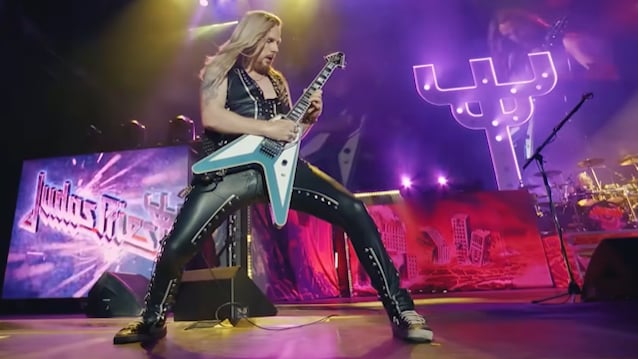
Maybe by the ’80s, being a relatively older band, they were a bit mismanaged or slower to adapt to changing times - at least in terms of communication and live presentation? Just a guess. Their stage show does feel somewhat underdeveloped earlier on, and only really steps up around Defenders of the Faith and Turbo. In that sense, they really needed someone like Rod Smallwood.
I agree that Killing Machine is somewhat experimental, though I’d say it’s also their first real step toward a more commercial direction. To me, it’s a bit of a mixed bag. The production feels muddy or lacking bite, and while some songs are great, others lean too much into commercial territory.
Great:
“Delivering the Goods,” “Hell Bent for Leather,” “The The Green Manalishi” - live, this is one of my favorites. Priest were really great at making cover songs their own, “Before the Dawn” - it feels complete in its own right and even reminds me of UFO.
Mostly Good:
“Rock Forever,” “Evening Star,” “Burnin' Up,” “Killing Machine,” “Running Wild”
Meh:
“Take On the World,” “Evil Fantasies”
I also think their ’70s albums can feel a bit uneven at times, which makes sense since they were still shaping their style. For example, “Last Rose of Summer” isn’t a bad song on its own, but after the punch of the opening tracks, it feels out of place to me.
That said, when a song is truly great - like “Before the Dawn” - you accept it without conditions. In that sense, Sin After Sin loses out to Stained Class, which flows much more smoothly as a complete record without that “something feels out of place” effect. Just imo.