You are using an out of date browser. It may not display this or other websites correctly.
You should upgrade or use an alternative browser.
You should upgrade or use an alternative browser.
Fictional Album Art
- Thread starter Azas
- Start date


Azas
The Game That Will Not Fail
BRUCE DICKINSON
Something in the Water (2030)
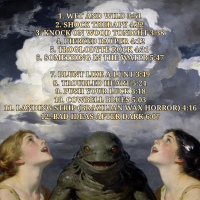
1. Wet and Wild 3:51
2. Shock Therapy 4:22
3. Knock on Wood Tonight 3:38
4. Pierced Pauper 4:12
5. Troglodyte Rock 4:31
6. Something in the Water 5:47
7. Blunt Like a Lunt 3:49
8. Troubled Heart 5:24
9. Push Your Luck 3:21
10. Cowbell Blues 5:03
11. Landing Strip (Brazilian Wax Horror) 4:16
12. Bad Ideas After Dark 6:07
All tracks are written by Bruce Dickinson, Tanya O'Callaghan, Dave Moreno, Mistheria, Philip Naslund and Chris Declercq.
Album Review: Something in the Water (2030)
By the year 2030, most rock singers of Bruce Dickinson’s vintage are expected to do one of two things. Option one: release a tasteful acoustic album about autumn leaves, mortality, and the quiet dignity of aging. Option two: tour casinos in Nevada with a backing band that looks like it was assembled during a coffee break at a tax office.
Bruce Dickinson, naturally, chose option three. He made the loudest, dumbest, most joyfully irresponsible rock ’n’ roll album of his solo career. And somehow it works.
To understand Something in the Water, you first have to remember the strange calm that preceded it.
Dickinson’s previous records had grown increasingly reflective.
2027’s Gravity of the Wild was a brooding meditation on humanity, wilderness, and the occasional existential thunderstorm.
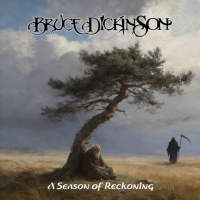
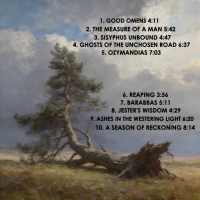
2029’s A Season of Reckoning went even further, wandering through themes of time, legacy, and spiritual survival with the calm authority of a man who could quote medieval theology while flying a Boeing through bad weather.
In other words, Bruce Dickinson had entered his philosopher phase.
The elder statesman of heavy metal.
The man who might explain alchemy to you over tea.
Then something strange happened.
Iron Maiden quietly slipped into hiatus.
Not retirement. Nobody used that word. Metal musicians treat the word retirement the way vampires treat garlic.
The band simply stopped touring.
The global circus paused.
The giant war machine of heavy metal fell silent.
And Bruce Dickinson, apparently left alone with too much creative energy and several amplifiers, decided that philosophy could wait.
If Something in the Water has a thesis, it is very simple:
Life is short.
Amplifiers are loud.
Let’s see what happens.
Gone are the labyrinths of mysticism and cosmic reflection. No alchemical allegories. No scholarly footnotes. No whispered warnings about the metaphysical structure of the universe.
Instead, Dickinson has chosen to explore a different field of human inquiry: bad decisions.
More specifically: the kind of bad decisions traditionally made somewhere between midnight and sunrise while electric guitars are involved.
It is, in the most scientific sense possible, a rock ’n’ roll record.
Which brings us back to the central mystery of the album title. Something in the Water. No one is entirely sure what that “something” is.
It might be the spirit of late-night rock radio.
It might be the ghost of every questionable bar between 1978 and 1986.
It might be the simple realization that after forty-plus years in heavy metal, Bruce Dickinson still enjoys singing about mischief.
Whatever it is, it appears to have worked.
Because instead of sounding like geriatric rock — the fate many quietly feared — Dickinson and company deliver something much stranger.
A veteran metal frontman, standing in 2030, looking at the entire history of rock music behind him…
…and deciding that the correct response is to turn the amplifier up until the walls start sweating.
Which, historically speaking, has always been a very good idea.
Rock ’n’ Roll, the Way It Was Supposed to Be
Musically, the album plants one boot firmly in the glory days of late ’70s and early ’80s heavy rock. Imagine the militant stomp of Balls to the Wall colliding with the feral speed of Kill 'Em All.
Then sprinkle in the swagger of UFO, the stadium grin of KISS, the melodic sting of Scorpions, and the Hammond-haunted blues-metal DNA of Deep Purple.
The guitars sound tasty in the old-school sense of the word:
- crunchy but articulate rhythm tones
- midrange-rich leads that slice through the mix like a switchblade
- palm-muted gallops that feel like early thrash before it learned to take itself too seriously
- solos that bend notes long enough to make them confess their sins
And Dickinson—now decades into his career—sounds like a man who has rediscovered that rock music was never meant to behave politely.
Guitars, Grit, and the Engine Room of the Record
If Something in the Water is a celebration of hard rock’s mischievous spirit, then its true engine lies in the guitars—the twin six-string attack of Philip Näslund and Chris Declercq, who approach this record like two mechanics restoring a vintage muscle car and then immediately taking it for an illegal midnight drag race.
The first thing you notice is the tuning and tone philosophy. In an age where modern metal guitars often sink into subterranean tunings, this album proudly lives in the classic E-standard and occasional drop-D territory—that glorious sweet spot where riffs remain punchy, chords ring with clarity, and the midrange bite slices through the mix like a serrated knife.
That decision alone places the album spiritually somewhere between Balls to the Wall and Kill 'Em All:
tight, aggressive, but never muddy.
The guitar sound is crisp, crunchy, and deliciously analog-feeling. Think hot-rodded British stacks pushed just past the point of politeness: rich lower mids, singing sustain, and that slightly ragged edge that only appears when the amplifier feels like it might burst into flames at any moment.
It’s the kind of tone that would make the ghosts of UFO, Scorpions, and Deep Purple nod approvingly from the great backstage bar in the sky.
Fast, Loud, and to the Point
One of the defining traits of the album is its economy of violence. Most songs clock in between three and four minutes, which means riffs arrive quickly, do their job, and exit before anyone gets bored.
Take “Shock Therapy.”
The song rides on a machine-gun alternate-picked riff, somewhere between early speed metal and classic heavy rock gallop. Näslund and Declercq lock into a tight rhythmic unison before splitting into harmonized leads that feel like a sly nod to the melodic twin-guitar heritage that Dickinson helped popularize in Iron Maiden.
The solo section is refreshingly old-school:
- one guitarist bends notes toward the stratosphere
- the other answers with rapid pentatonic runs
- and the entire thing ends with a squealing pinch harmonic that sounds like a motorcycle leaving the scene.
Caveman Riffology
“Troglodyte Rock” deserves special mention, because the riff sounds like it was carved into a cave wall with a stone chisel.
It’s built around a drop-D stomp—big open-string chugs punctuated by sliding power chords that swagger with primitive joy. The groove is almost prehistoric in its simplicity, but that’s exactly the point.
If the album occasionally feels like a love letter to early metal records, this song is the part where the letter is written in beer foam and distortion.
The Title Track Stretch-Out
The nearly six-minute “Something in the Water” allows the guitarists to stretch their legs.
The opening riff slithers in with a bluesy swagger reminiscent of classic Deep Purple jams before gradually morphing into a towering mid-tempo groove. Over the course of the track, Näslund and Declercq trade solos that move from melodic phrasing into near-psychedelic territory.
There’s wah-pedal drama, wide vibrato, and a closing dual-lead harmony that feels like it could soundtrack a sunset ride through the desert in a 1978 muscle car.
Speed and Attitude
Then there’s “Push Your Luck.” Clocking barely over three minutes, it’s one of the album’s fastest tracks—a blitz of downpicked thrash-adjacent riffing that would not sound out of place on early ’80s underground metal records.
But even here the guitars remain playful. The chorus suddenly pivots into a swaggering rock groove, like the band collectively deciding mid-song that speed is fun but strutting is even better.
The Rhythm Section: The Unsung Heroes
Of course, even the sharpest guitars need a foundation. And the rhythm section on this record is rock-solid.
Behind the kit sits Dave Moreno, whose drum sound deserves a medal for clarity and punch. The snare cracks like a rifle shot, the kick drum is tight without sounding triggered, and the cymbals shimmer without drowning the guitars.
Moreno plays with the instincts of someone who understands exactly what this kind of music needs:
- keep the groove tight
- keep the tempo driving
- never get in the way of the riffs
Simply put: he is the backbone of the record.
The Bass That Refuses to Hide
And then there’s the bass. Played by Tanya O'Callaghan, the instrument sits prominently in the mix—a welcome throwback in an era when bass guitars sometimes vanish into low-frequency fog.
The influence of Steve Harris from Iron Maiden is impossible to ignore. O’Callaghan’s tone has that same metallic growl, and she often follows the guitar riffs with a slightly more melodic twist.
No, the bass lines aren’t quite as acrobatic as Harris’s legendary gallops—but they are deeply satisfying, audible, and full of character.
Most importantly, together with Moreno’s drums they create a solid rhythmic foundation that allows the guitars to go wild without the whole structure collapsing.
On songs like “Wet and Wild” and “Blunt Like a Lunt,” that rhythm section locks into grooves so sturdy you could probably build a house on them.
A Band That Sounds Like a Band
Perhaps the most refreshing thing about the musicianship on Something in the Water is that it sounds organic.
Not overly polished.
Not digitally sterilized.
Just four musicians playing loud rock music with enthusiasm, attitude, and a clear understanding that sometimes the best musical decision is simply: Play the riff. Play it again. Then play it louder. And on this record, that philosophy works beautifully.
Lyrics: Mischief, Mayhem, and Suspiciously Good Poetry
If Bruce Dickinson’s previous two albums searched the cosmos for meaning, Something in the Water searches the city at 2:30 in the morning for a bar that’s still open.It usually finds one.
The lyrics here abandon the metaphysical labyrinths of recent years and dive headfirst into something far more dangerous: reckless fun, bad judgment, and the timeless human art of making questionable decisions with great enthusiasm.
Dickinson approaches the subject matter with the theatrical seriousness of a Shakespearean actor who has just discovered the existence of dive bars, neon lights, and extremely loud jukeboxes.
The result is lyrical mayhem—delivered with a wink.
Now, let’s be honest about something.
Yes, the album occasionally wanders into the same mischievous territory occupied by bands like Steel Panther or the more notorious moments of Mötley Crüe.
There are double entendres.
There are eyebrow-raising metaphors.
There are lines that will absolutely cause at least one festival crowd somewhere to scream in unison while security personnel quietly reconsider their life choices.
But there’s a crucial difference. Bruce Dickinson, unfortunately for anyone hoping for pure stupidity, is a very good writer. Even at his most outrageous, he cannot stop sneaking in clever phrasing, rhythmic poetry, and little flashes of imagery that feel suspiciously literary. If the most outrageous lyrics of glam metal were juvenile fireworks, Dickinson’s here are fireworks with Latin inscriptions on the shells.
The album opens its lyrical campaign with “Wet and Wild,” a song that storms in like a biker rally accidentally colliding with a power station.
Dickinson sets the tone early:
“Midnight gasoline running through my veins,
Bad ideas whisper louder than the rain.”
It’s reckless, vivid, and just poetic enough to suggest the narrator might actually own a library card somewhere.
“Shock Therapy” follows with the energy of a man who has clearly decided that subtlety is overrated. Over a galloping riff that would make early thrash bands nod approvingly, Dickinson delivers a chorus that sounds like medical advice from a lightning storm:
“Plug me into the thunder line,
I need a little lightning in my spine.”
This is not the kind of therapy covered by insurance.
Then comes “Knock on Wood Tonight,” which leans into the swaggering groove of classic British hard rock. Smoky clubs, leather jackets, amplifiers humming like dangerous machinery.
Dickinson grins through the microphone:
“If luck runs out and the lights burn low,
I’ll knock on wood and see how far we go.”*
You can practically hear half the audience laughing before the chorus even arrives.
“Pierced Pauper” adds a touch of street mythology to the mix, where Dickensian poverty collides with glam-metal bravado. It’s the sort of song where gutter poetry meets stadium swagger:
“Saints in silk and sinners in chrome,
Every king started life in a borrowed home.”
Which is either a clever social observation or the most philosophical line ever written about wearing sunglasses at night. Possibly both.
And then there’s “Troglodyte Rock.”
The title is not metaphorical.
This song appears to operate on the theory that somewhere in prehistory, a caveman discovered distortion pedals and immediately invented heavy metal.
Subtle it is not.
Fun it absolutely is.
The title track, “Something in the Water,” stretches into a near-six-minute groove monster that comes closest to the grandeur Dickinson explored on earlier albums. But even here the tone is less cosmic reflection and more celebratory chaos:
“There’s something in the water tonight,
Makes the angels dance with dynamite.”
Which raises several theological questions that the album wisely chooses not to answer.
Side two continues the cheerful descent into rock ’n’ roll misbehavior.
“Blunt Like a Lunt” stomps along with cowbell-powered confidence that feels like it escaped from a forgotten 1978 arena tour bus. Meanwhile “Push Your Luck” is a three-minute adrenaline blast built on punk-speed riffs and the sort of chorus that encourages poor decision-making.
“Cowbell Blues,” as the title politely suggests, contains a truly heroic amount of cowbell. Dickinson even gives the song a medical diagnosis:
“Doctor said I’m suffering from a rhythmic disease —
Prescription reads: MORE COWBELL, please.”
Somewhere, a festival audience is already chanting it.
Then comes the album’s most gloriously ridiculous moment: “Landing Strip (Brazilian Wax Horror).” It may also be the funniest song Bruce Dickinson has ever recorded. The lyrics document a cosmetic adventure gone catastrophically wrong, culminating in the unforgettable line:
“I went in smooth, came out screaming,
Beauty hurts but the crowd kept cheering.”
You can practically hear the band trying—and failing—not to laugh while recording it.
Yet in the middle of all this gleeful chaos sits one genuine emotional anchor: “Troubled Heart.”
It’s the most serious song on the record, a bluesy power ballad where Dickinson lets the humor drop and the voice soar into the kind of dramatic territory that once produced classics like Tears of the Dragon. The melody climbs, the lyrics ache, and suddenly the album reminds you that beneath all the jokes is still one of heavy metal’s greatest storytellers.
It’s the quiet moment before the party resumes.
Finally, the album closes with “Bad Ideas After Dark,” a slow-burning rocker that gradually builds from smoky groove to stadium-sized chorus.
Dickinson leaves listeners with one last philosophical observation about nightlife:
“Every devil gets a halo in the neon after ten.”
Which might be the closest Something in the Water comes to offering wisdom.
It’s not cosmic truth.
It’s not alchemical enlightenment.
But as life advice for a Saturday night in a loud bar somewhere, it’s probably good enough.
The Cover Art: Visions From the Water
Some album covers decorate a record.Others announce a world.
The artwork of Something in the Water belongs firmly to the second category. At first glance it appears to be a romantic pastoral painting—something that could hang comfortably in a 19th-century gallery between idyllic countryside scenes and heroic landscapes.
But look closer.
Because the moment you truly examine it, it becomes clear that the painting is not simply decorative. It is a visual manifesto for the entire record—a mythological parable about rock ’n’ roll itself.
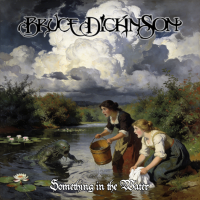
The Front Cover: The Awakening
Two young women kneel beside a tranquil country pond, a bucket and laundry at their side, carrying out a simple rural chore—fetching water and washing clothes. The setting is calm and pastoral: lush vegetation surrounds them, delicate lilies float on the surface, and a narrow stream winds away into the distant countryside.
And yet something is wrong.
From the depths of the pond emerges a creature—amphibious, ancient, gleaming with the strange sheen of something that has waited beneath the surface for a very long time. It rises with confidence, not as a predator but as a herald.
The symbolism is unmistakable.
The pond represents the quiet, orderly world of everyday life.
The creature represents the eruption of rock ’n’ roll energy—wild, mischievous, untamed. A being cut from the same mythological cloth as the swamp legends that once inspired creatures like the Creature from the Black Lagoon, yet clearly reborn for a different purpose.
Its expression is not monstrous. It is triumphant.
It has been waiting.
And the moment has finally come.
The two women react with astonishment because they have witnessed something extraordinary: the moment when ordinary life encounters pure, primal rock ’n’ roll spirit.
Above them towers a cathedral of thunderclouds, an enormous sky rendered in sweeping Romantic drama. These clouds are not mere scenery. They are the cosmic stage upon which the transformation unfolds. The heavens themselves gather in vast swirling formations, announcing that something powerful has awakened beneath the water.
It is the same sense of scale that has always surrounded Iron Maiden and the theatrical imagination of Bruce Dickinson. Even in a moment of humor, the universe behaves as if something monumental has occurred.
And it has.
The spirit of unrestrained rock ’n’ roll has surfaced.
The Back Cover: Revelation
The reverse artwork reveals the aftermath.
The creature now stands confidently between the two women. The tension of the first encounter has vanished. What remains is revelation.
The women gaze upward in awe, their expressions illuminated by wonder rather than fear. They have understood what has appeared before them. The creature itself smiles with unmistakable satisfaction—like a proud host who has successfully introduced his guests to an entirely new world.
The transformation is complete.
Where there was once surprise, there is now initiation.
The sky still roars above them in magnificent cloud formations, but now it feels less like a storm and more like a cosmic orchestra warming up. One can almost hear the thunder rolling like the opening bars of “Shock Therapy,” or the slow rising groove of the title track echoing across the clouds.
The creature has not frightened them.
It has awakened them.
Though some observers may insist that the amphibian figure standing triumphantly between the two women is engaged in activities far more… intimate than spiritual—awakening not a devotion to rock ’n’ roll but rather certain earthly curiosities of a more promiscuous variety—such interpretations merely confirm an eternal truth: in the grand tradition of hard rock, those impulses have always marched proudly alongside the music anyway, often as a rather delightful bonus.
The Myth Beneath the Music
Taken together, the two paintings form a perfect allegory for the experience of the album itself.
First comes the unexpected encounter.
Then comes understanding.
And finally comes acceptance—an embrace of the joyous, mischievous chaos that defines the music inside.
This visual narrative mirrors the spirit of the record: bold, theatrical, playful, and unapologetically alive. Just as the creature emerges from the pond to disrupt the quiet countryside, the music of Something in the Water bursts through the polite surface of modern rock with the swagger and excitement of another era.
The message of the artwork is perfectly clear.
There is something in the water.
Something ancient.
Something loud.
Something that refuses to stay beneath the surface any longer.
And once it rises, the world can only do one thing in response:
Stand in awe and listen.
Final Verdict: Turn It Up and Regret Nothing
In a career full of ambitious concept albums, philosophical detours, historical meditations, and the occasional academic lecture disguised as heavy metal, Something in the Water might be the most unapologetically fun record Bruce Dickinson has ever made.Which is saying something.
This is a man who has written songs about alchemy, ancient warfare, mysticism, aviation, and the metaphysical structure of the universe. A man capable of quoting literature, piloting aircraft, and screaming high notes that could wake geological formations.
And in 2030 he has chosen to dedicate an entire album to reckless joy.
It’s loud.
It’s shameless.
It grins like a drunk at last call who has just discovered the jukebox still works.
Part of the magic here is how little the album tries to prove.
There’s no attempt to redefine metal. No grand manifesto about the future of the genre. No philosophical framework explaining humanity’s place in the cosmic order.
Instead, Dickinson does something far more radical. He remembers that rock ’n’ roll is supposed to be fun.
Not respectable fun. Not tasteful fun. Not the kind of fun that critics politely analyze while sipping wine.
The loud kind.
The slightly dangerous kind. The kind that begins around midnight and ends with someone saying, “That seemed like a good idea at the time.”
Musically, the band delivers the goods with alarming confidence. Tanya O'Callaghan and Dave Moreno lock into grooves that feel like they were forged inside a barroom engine room. Mistheria adds just enough theatrical sparkle to keep things gloriously over-the-top, while guitarists Philip Naslund and Chris Declercq build riffs that sound like they were designed to frighten sensible furniture.
And Dickinson himself?
He sounds like a man who has rediscovered the simple joy of yelling at amplifiers.
The voice still soars. The theatrical flair is intact. But there’s also a playful looseness here—a sense that the singer is enjoying himself in a way that sometimes disappears when musicians become elder statesmen.
This is not elder statesman Bruce Dickinson.
This is Bruce Dickinson sneaking out the back door of the library and heading straight for the loudest bar in town.
The album also arrives at a curious moment in metal history.
With Iron Maiden currently resting in that mysterious state known as “not retired but also not touring,” Dickinson stands here like the last guy still awake at the party.
Instead of quietly tidying up, he’s decided to crank the stereo one more time. Actually, several more times. Possibly until sunrise.
Something in the Water will not change the course of philosophy.
It will not solve the mysteries of the universe.
It will, however, change the volume setting on your stereo.
It’s reckless.
It’s relentless.
It’s occasionally ridiculous.
And it’s an absolute blast.
Some albums make you think. This one makes you turn it up, open another drink, and seriously consider making decisions that tomorrow’s version of yourself will politely describe as “educational.”
And honestly? Heavy metal could use more of that.
Rating:  ½ / 5
½ / 5
(The missing half-star has been temporarily withheld for safety reasons. The world is still not fully prepared for the long-term consequences of this much cowbell.)
Last edited:

Azas
The Game That Will Not Fail
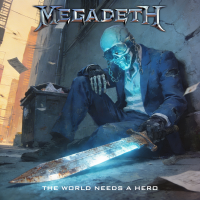
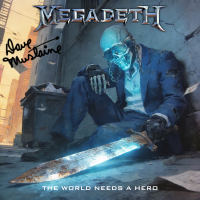
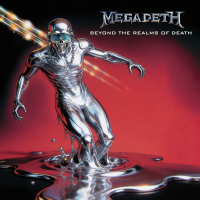
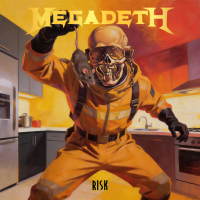
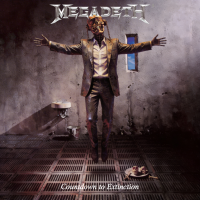
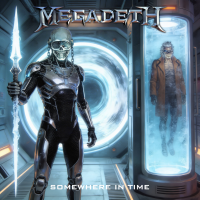
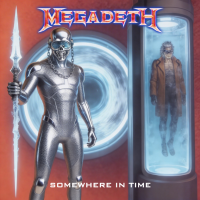
In a parallel universe, this Megadeth album was a true return to form - on par with Rust in Peace and Countdown to Extinction. And mind you, its cover artwork isn’t just some random mess.
The hero the world needs is abandoned, forgotten, left to die in some deserted, trashy alley. He’s almost forgotten who he once was. His sword is rusted, yet it still carries a faint glimmer of great power - just enough to keep him from slipping completely into oblivion, and to remind both him and us that something still matters.
Hope smolders.
Last edited: