
You are using an out of date browser. It may not display this or other websites correctly.
You should upgrade or use an alternative browser.
You should upgrade or use an alternative browser.

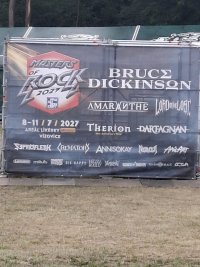
Bruce really hates breaks and not having any appointments scheduled, doesn't he?
The part about the solo album might be interesting.

 comiccon2026.sched.com
The part about the solo album might be interesting.
Comic-Con 2026: Bruce Dickinson's The Mandrake Project:...
View more about this event at Comic-Con 2026
comiccon2026.sched.com

GhostofCain
Ancient Mariner
Bruce really hates breaks and not having any appointments scheduled, doesn't he?
The part about the solo album might be interesting.
Comic-Con 2026: Bruce Dickinson's The Mandrake Project:...
View more about this event at Comic-Con 2026
Thanks for sharing.
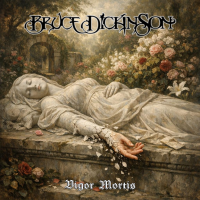
So Vigor Mortis could be the title of the solo album. Interesting.
An ode to Viagra (getting something stiff but also full of vigor) or an album about zombies?
GhostofCain
Ancient Mariner
Found this photo on Czech fan fb group. Hopefully there will be some solo concerts, not just festivals.
Big fat pass if it is just festivals.
Thanks for sharing.
So Vigor Mortis could be the title of the solo album. Interesting.
An ode to Viagra (getting something stiff but also full of vigor) or an album about zombies?
That would be something new - a product that no metal band has branded yet, as far as I know. And there aren’t that many of those around these days...
Although “Vigor Mortis” itself isn’t exactly original. It’s a book, a game, and even a metal band with a self-titled album...
GhostofCain
Ancient Mariner
That would be something new - a product that no metal band has branded yet, as far as I know. And there aren’t that many of those around these days...
Although “Vigor Mortis” itself isn’t exactly original. It’s a book, a game, and even a metal band with a self-titled album...
At least this time round does not seem to be something done before by William Blake...
GhostofCain
Ancient Mariner
I don't have high expectations for this album. I was disappointed by Mandrake, and this album is coming out so soon after it, even though he surely put his best ideas into Mandrake, why not?
But of course, I'd love to be pleasantly surprised.
It surely cannot be worse than the Mandrake Turd, can it?


Kalata
Out of the Silent Planet
He continues with the unexpected album titles, yet a typical theme for his solo work. Vigor Mortis sounds curious (the cover too, I guess it will be darker again, or?) and probably without a title track again(?), hope not.So Vigor Mortis could be the title of the solo album. Interesting.
Last edited:

redandtheblack92
Time to meet your maker
Sounds a bit Blakey/ShakespeareanHe continues with the unexpected album titles. Vigor Mortis sounds curious (the cover too) and probably without a title track again(?), hope not.
redandtheblack92
Time to meet your maker
In fact Vigor Mortis can be a title track. From what I’ve read a little, might have something to do with death (Mortis). Wonder what Vigor meansHe continues with the unexpected album titles. Vigor Mortis sounds curious (the cover too) and probably without a title track again(?), hope not.

Azas
HiraetH
Vigor refers to physical or mental strength, energy, and enthusiasm. It denotes dynamic vitality and forceful intensity in action, thought, or expression.
*
Edit: I found this. I don't know how reliable it is, but according to one source, Vigor Mortis comes from Latin and means "the force of death."
*
When combined, "vigor mortis" translates literally to "liveliness of death"- which is a contradiction of term.
*
Vigor mortis is not a classical or established Latin expression. It is a modern coinage modeled after the well-known term rigor mortis ("stiffness of death"). Because of that, there is no single "official" translation, but we can analyze it grammatically.
If someone used Vigor Mortis as an album title, listeners might interpret it as:
***
A great theme for an album, if you ask me. I'm already sold.
*
Edit: I found this. I don't know how reliable it is, but according to one source, Vigor Mortis comes from Latin and means "the force of death."
*
When combined, "vigor mortis" translates literally to "liveliness of death"- which is a contradiction of term.
*
Vigor mortis is not a classical or established Latin expression. It is a modern coinage modeled after the well-known term rigor mortis ("stiffness of death"). Because of that, there is no single "official" translation, but we can analyze it grammatically.
- vigor = vigor, strength, energy, vitality, liveliness, force
- mortis = "of death" (the genitive singular of mors, meaning "death")
- the vigor of death
- the strength of death
- the vitality of death
- the force of death
- death's vigor (a more natural English rendering)
- life persisting within death,
- death possessing its own terrible energy,
- vitality transformed rather than extinguished,
- the power or force inherent in death.
If someone used Vigor Mortis as an album title, listeners might interpret it as:
- "The Strength of Death"
- "Death's Vitality"
- "The Force of Death"
- "Life Within Death"
- "The Energy of Death"
***
A great theme for an album, if you ask me. I'm already sold.
Last edited:

Cat Milk Supreme
Ancient Mariner
I'm hopeful for this one. Didn't like Mandrake but lots of the songs were old and the whole process took years whereas this one seem like more dedicated time in the studio with a set band so here's hoping that they came up with some tasty shit. And Bruce didn't contribute much to Senjutsu really so hopefully he's been throwin out the bangers for his new one.I don't have high expectations for this album. I was disappointed by Mandrake, and this album is coming out so soon after it, even though he surely put his best ideas into Mandrake, why not?
dickinson1978
Ancient Mariner
They recorded 18 songs in 3 weeks or something like thatI'm hopeful for this one. Didn't like Mandrake but lots of the songs were old and the whole process took years whereas this one seem like more dedicated time in the studio with a set band so here's hoping that they came up with some tasty shit. And Bruce didn't contribute much to Senjutsu really so hopefully he's been throwin out the bangers for his new one.

Yax
Ancient Mariner
You have. I have noticed it and appreciate it.Don't you think I've scaled back my use of AI art quite a bit?