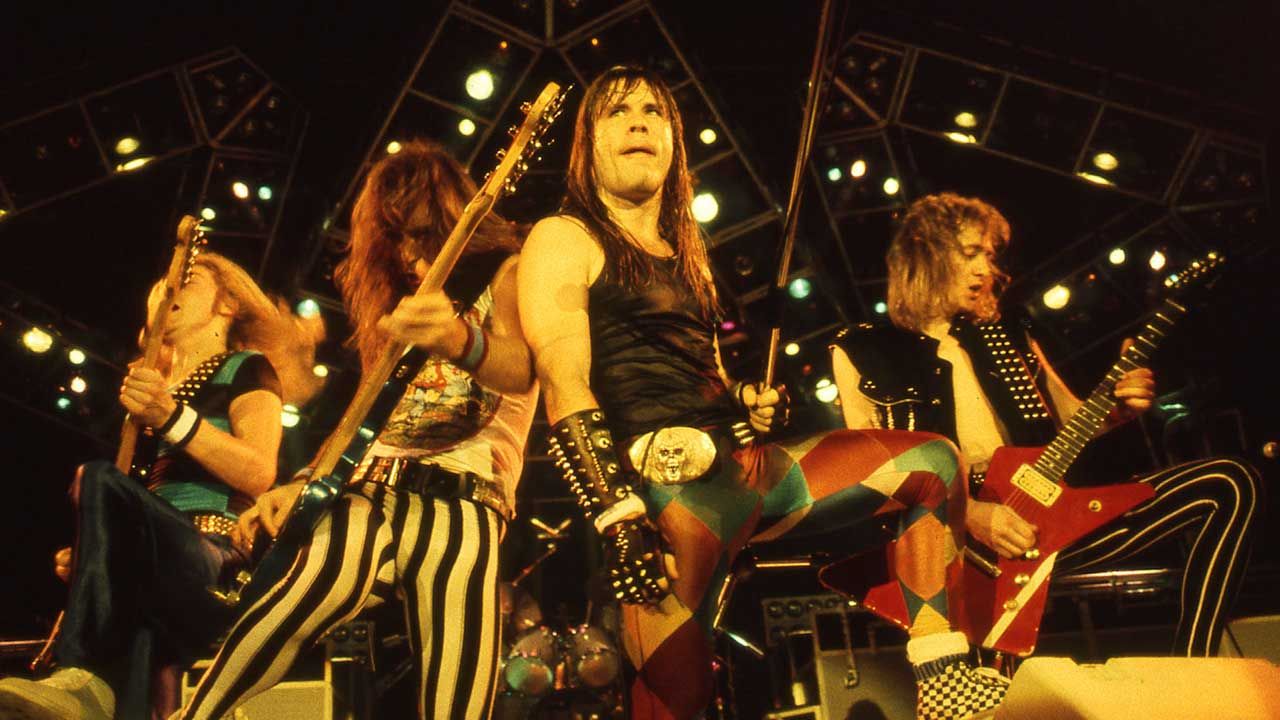
News Burning Ambition Documentary

Interview with Bruce Dickinson about the documentary “Burning Ambition,”
Rock Hard Magazine, No. 467, May 2026

My translation

...
RH: The film is relentlessly honest about the highs and lows of your career. How do you feel about that?

BD:
When the idea of making a documentary about our career first came up, we originally didn’t want anything to do with it. We don’t give a damn about the editing or anything related to it. We didn’t want to get involved. The point was to let an outsider tell the story.
There’s so much material that we could have made a ten-hour documentary, but then people would have died of boredom. The narrative
has to get to the point. Of course, there will be fans who accuse us of having forgotten this or that, but for people who don’t know the story of IRON MAIDEN, “Burning Ambition” is a great introduction. That’s why it was important to us to have this outside perspective. And then you can’t
come in every five minutes wanting to change something in the film. “Oh, my hair doesn’t look good in this shot, cut the scene.”
That’s not how it works. We’re not a bunch of poodles. That’s why this film is anything but perfect. And I love that. There’s nothing I would change about “Burning Ambition.”

So that means you handed over complete control to director Malcolm Venville? The documentary about Judas Priest came out just under two months before yours, and Rob Halford told me in an interview that handing over 100 % control was a prerequisite for the project’s success. How do you see it?
Yeah, when I saw the film for the first time, it was basically already finished. I’ll be honest with you: the problem I had with the film wasn’t the content, but the editing, especially in the first third. But that wasn’t Malcolm’s fault. So I took notes and gave my two cents.
Funnily enough, my notes matched almost one hundred percent with Steve’s, which he had made independently of me. And even more astonishing was that Ben Smallwood (son of manager Rod Smallwood - mm), who was the creative director of the entire project, had very similar criticisms as well. He said, “I’m relieved that you guys feel the same way I do, because now I can go to the production team and demand that changes be made. Without you, they wouldn’t have believed me at all.” It wasn’t about cutting out any specific scenes, but the context was simply missing. The first third of the film was incomprehensible in the original version. But with one or two minor adjustments to the presentation of the material, we had that sorted out in no time.
That made the narrative much stronger. I got into Maiden with “The Number Of The Beast” and that album was recorded with Clive (Burr, the late drummer - mm). But up to that point in the film, Clive hadn’t even been mentioned. He simply didn’t exist in the original cut, so I went over and said, “We need to include something about Clive.” We pushed for things like that. People who haven’t delved deeply into IRON MAIDEN wouldn’t have understood the strong feelings we have toward people like Clive or Paul Di’Anno. There was always a close bond between us, even though neither of them had been with Maiden for years and, sadly, are no longer with us today.”

In the film, the early days of the band’s career are described as a roller coaster ride. Do you still feel like you’re on a roller coaster today?


Well, yes and no. When we set out on a new tour, we still have the same feeling: Here we go, everyone buckle up. Since we’re still giving it our all physically on stage, our bodies have to be prepared to endure discomfort and pain for the next six months. But you hope that the fans’ reactions and the atmosphere will make the ordeal worth it.”

The main narrative of “Burning Ambition” is the band’s rise from tiny East End dive bars to the world’s biggest arenas. As the first rock band in the world, IRON MAIDEN will perform this summer at the legendary San Siro Stadium in Milan. Do you see this as another milestone in your career?


San Siro, well, I’m not an obsessive soccer fan; that’s Steve, not me. I enjoy watching people who are good with the ball, but that’s about it. I don’t have a favorite team, but of course I understand that many people do. For many fans, San Siro is the Mecca of Italian soccer - including my wife, who is half Italian. When she found out we were playing at San Siro, she totally freaked out: “Oh my God, my team plays in that stadium.” She supports the club that’s based there - whichever one it is, since there are two, right? (AC Milan and Inter Milan - make up your mind! - mm) It’s the biggest stadium in this city, and in that sense, of course, another milestone for IRON MAIDEN, just like our show at the London Stadium before. Those are always special events, no question about it. I just have to think back to our shows in the soccer stadiums of Madrid and Barcelona. These places were built for ecstatic audience reactions. It’s definitely going to be great.
...
 
That is interesting. I saw that rumour (that the documentary is being delayed because Steve isn’t satisfied with it) in a lot of Facebook groups.

It was mentioned here too, on page 110 of “Run For Your Lives World Tour 2026 Rumors and Speculation,” but no one believed it.
So the rumour was not entirely off the mark.

And Bruce again with the half-Italian. He has mentioned that before, too, to defend his stance on Brexit. But I still haven’t understood the logic behind it.
Is the show in San Siro also promoted as "first rock band playing there"?
 
That is interesting. I saw that rumour (that the documentary is being delayed because Steve isn’t satisfied with it) in a lot of Facebook groups.

It was mentioned here too, on page 110 of “Run For Your Lives World Tour 2026 Rumors and Speculation,” but no one believed it.
So the rumour was not entirely off the mark.

And Bruce again with the half-Italian. He has mentioned that before, too, to defend his stance on Brexit. But I still haven’t understood the logic behind it.
Is the show in San Siro also promoted as "first rock band playing there"?
I got thr ticket to see it. I think its not true
 
Bruce and I came back to the band and it was like a... I don’t know about a rebirth, but it’s certainly a new chapter in the band’s long history, which has turned out to be 50 years. That’s a very important time. Previous to that, Bruce and I had been touring together in his project and the planets and the stars aligned. We came back and it was great. It was great for me having been in the band in the '80s to come back and do things a little different and a second bite at the cherry.

When I rejoined the band and I was able to take an outside-looking-in perspective, I appreciated it so much more and I could see what the band was all about and how important it was to people. It made the whole thing more enjoyable for me. I mean, I enjoyed the '80s, but it was like a grind. We did so many tours. We used to do back-to-back American tours, six months straight on the tour bus, all sitting together, looking at each other. It was brutal. I mean, fun times as well, but definitely my second time in the band was more enjoyable, I’d say. I've enjoyed every second since I've been back.

I mean, if Steve is wearing Spandex, you wear Spandex! It must be cool.

We didn’t have any involvement apart from, we were interviewed for it. But personally, as far as I know, none of the band were present at the edit or had any say. It was an outside thing. That’s what we wanted. We wanted an outside perspective on the band, an independent view. I think there’s a bit more of a deep dive into things that have been covered before, but it's much more in depth.

But yeah, you do get a different perspective when you’re not involved in something and then you come back. That was the great thing about coming back in 1999, coming back with a new energy and a new vision for it really, a fresh start.

But that’s what you have to do, especially a band like Maiden that was never going to get Top 40 records. We had hit records, but we weren’t going to ride to success on the back of a couple of songs. It was going to have to be road work, road work. Taking our music to people in the early days, we played everywhere. I mean, I can look at a map of America and I’m like, “I played there, played there,” all over!
Same with Europe. If we did a European tour, we’d do 8-10 shows in France, 8-10 shows in Spain. Now we only do one or two because we're playing bigger. If we hadn't done that, we wouldn't have been able to do what we're doing now. People come to see us because they remember we always took our music to them—and that's the way we had to do it. It was a grind, but it paid off.

Obviously it was hard for everyone at the time. I'd sort of lost my enthusiasm for it. We had many discussions.

So Bruce and I would go down to a pub, we’d play pool, have a beer, talk, and then we started to write because we were hanging out together. We came up with some great stuff, and it turned out to be a partnership that we continued and grew through the '80s. So when I left, I suppose he didn’t really have that anymore, but Janick came in and Bruce wrote quite a bit of stuff with Jan as well, but that's the way it goes.

Yeah. I never did it with them. I never did the club thing with Maiden. I mean, I’ve done clubs since then. I did a club tour with Bruce in the States in the ‘90s.

So we came back… well, Bruce rejoined first. I wasn't in the picture. And then I guess they talked amongst themselves and Steve said, "Well, let's get Adrian back and try with three guitars." I'd like to have been a fly on the wall when he said that to the rest of the guys, because it's pretty off the wall thing to want to do, but that's Steve, he does think outside the box.

I had this song I called “
The Wicker Man.” I had the riff to it and Bruce had some words and then before you know it, we started and that got the whole thing rolling again.

Well, I kind of reevaluated what I used to play because Janick was basically playing all the stuff that I used to play and he’s not the sort of guy who likes to change. So I thought, well, if this is going to work, I’m going to have to change what I do. Not so much solos, but riffs, I was playing octaves, different inversions on the chords, using different tunings, trying to add something a bit different to justify having three guitars and it worked. But I had to work out how to make it work.

I didn’t think it’d be the end of the band because I know what Steve is like. He just picks himself up and continues. Steve has always been the driving force of the band and his drive never seems to falter. He's always driving the band on and he wants to tour more. He's the driving force really. So that’s one of the things that's kept it going for 50 years.

It’s never going to be the same without Nick. Nick is larger than life. He put his mark on the band for sure all these years, but Simon has come in and done a great job. He’s a calmer presence than Nicko, he’s a quiet guy. He gets on with his job and it's different. It's different. But it's enabled us to carry on and play the music for the fans, really. And Nick is still a part of the band. He's almost like an ambassador. He's kind of stepped down rather than left, if you know what I mean. He's always a friend. We still speak a lot. That'll never change.
 
Bruce and I came back to the band and it was like a... I don’t know about a rebirth, but it’s certainly a new chapter in the band’s long history, which has turned out to be 50 years. That’s a very important time. Previous to that, Bruce and I had been touring together in his project and the planets and the stars aligned. We came back and it was great. It was great for me having been in the band in the '80s to come back and do things a little different and a second bite at the cherry.

When I rejoined the band and I was able to take an outside-looking-in perspective, I appreciated it so much more and I could see what the band was all about and how important it was to people. It made the whole thing more enjoyable for me. I mean, I enjoyed the '80s, but it was like a grind. We did so many tours. We used to do back-to-back American tours, six months straight on the tour bus, all sitting together, looking at each other. It was brutal. I mean, fun times as well, but definitely my second time in the band was more enjoyable, I’d say. I've enjoyed every second since I've been back.

I mean, if Steve is wearing Spandex, you wear Spandex! It must be cool.

We didn’t have any involvement apart from, we were interviewed for it. But personally, as far as I know, none of the band were present at the edit or had any say. It was an outside thing. That’s what we wanted. We wanted an outside perspective on the band, an independent view. I think there’s a bit more of a deep dive into things that have been covered before, but it's much more in depth.

But yeah, you do get a different perspective when you’re not involved in something and then you come back. That was the great thing about coming back in 1999, coming back with a new energy and a new vision for it really, a fresh start.

But that’s what you have to do, especially a band like Maiden that was never going to get Top 40 records. We had hit records, but we weren’t going to ride to success on the back of a couple of songs. It was going to have to be road work, road work. Taking our music to people in the early days, we played everywhere. I mean, I can look at a map of America and I’m like, “I played there, played there,” all over!
Same with Europe. If we did a European tour, we’d do 8-10 shows in France, 8-10 shows in Spain. Now we only do one or two because we're playing bigger. If we hadn't done that, we wouldn't have been able to do what we're doing now. People come to see us because they remember we always took our music to them—and that's the way we had to do it. It was a grind, but it paid off.

Obviously it was hard for everyone at the time. I'd sort of lost my enthusiasm for it. We had many discussions.

So Bruce and I would go down to a pub, we’d play pool, have a beer, talk, and then we started to write because we were hanging out together. We came up with some great stuff, and it turned out to be a partnership that we continued and grew through the '80s. So when I left, I suppose he didn’t really have that anymore, but Janick came in and Bruce wrote quite a bit of stuff with Jan as well, but that's the way it goes.

Yeah. I never did it with them. I never did the club thing with Maiden. I mean, I’ve done clubs since then. I did a club tour with Bruce in the States in the ‘90s.

So we came back… well, Bruce rejoined first. I wasn't in the picture. And then I guess they talked amongst themselves and Steve said, "Well, let's get Adrian back and try with three guitars." I'd like to have been a fly on the wall when he said that to the rest of the guys, because it's pretty off the wall thing to want to do, but that's Steve, he does think outside the box.

I had this song I called “
The Wicker Man.” I had the riff to it and Bruce had some words and then before you know it, we started and that got the whole thing rolling again.

Well, I kind of reevaluated what I used to play because Janick was basically playing all the stuff that I used to play and he’s not the sort of guy who likes to change. So I thought, well, if this is going to work, I’m going to have to change what I do. Not so much solos, but riffs, I was playing octaves, different inversions on the chords, using different tunings, trying to add something a bit different to justify having three guitars and it worked. But I had to work out how to make it work.

I didn’t think it’d be the end of the band because I know what Steve is like. He just picks himself up and continues. Steve has always been the driving force of the band and his drive never seems to falter. He's always driving the band on and he wants to tour more. He's the driving force really. So that’s one of the things that's kept it going for 50 years.

It’s never going to be the same without Nick. Nick is larger than life. He put his mark on the band for sure all these years, but Simon has come in and done a great job. He’s a calmer presence than Nicko, he’s a quiet guy. He gets on with his job and it's different. It's different. But it's enabled us to carry on and play the music for the fans, really. And Nick is still a part of the band. He's almost like an ambassador. He's kind of stepped down rather than left, if you know what I mean. He's always a friend. We still speak a lot. That'll never change.
So tours as we said
 
Interview with Bruce Dickinson about the documentary “Burning Ambition,”
Rock Hard Magazine, No. 467, May 2026

My translation

It is indeed interesting that Bruce confirms the rumou that some band members were unhappy with the documentary.
But to say it has nothing to do with the director?
Of course, the director has to make sure the storyline is coherent.
 
Loudwire issues a review of documentary without much spoilers (I'll put them here anyway). This part I find interesting as it seems that Bruce is no longer in denial of a way he behaved in early 90s prior to his leaving.

Bruce Dickinson's waning interest in Iron Maiden before his '90s exit is actually shaded by what comes off as the most confrontational moment of Burning Ambition. McBrain bluntly resented the way the singer handled the end of his first tenure with the group, arguing that performing while being disinterested in continuing with Iron Maiden showed a lack of respect for the fans.

There it is again. The fans.

Even when Dickinson returned (alongside Smith), the drummer's stance remained the same. He spoke directly to Dickinson about it, to which the frontman replied that he loved McBrain because of what that sentiment stands for. Of course, that tension dissolved a long time ago as the reunion era — now longer than the pre-1999 era — has climbed to unfathomable new heights.
 
Loudwire issues a review of documentary without much spoilers (I'll put them here anyway). This part I find interesting as it seems that Bruce is no longer in denial of a way he behaved in early 90s prior to his leaving.

Bruce Dickinson's waning interest in Iron Maiden before his '90s exit is actually shaded by what comes off as the most confrontational moment of Burning Ambition. McBrain bluntly resented the way the singer handled the end of his first tenure with the group, arguing that performing while being disinterested in continuing with Iron Maiden showed a lack of respect for the fans.

There it is again. The fans.

Even when Dickinson returned (alongside Smith), the drummer's stance remained the same. He spoke directly to Dickinson about it, to which the frontman replied that he loved McBrain because of what that sentiment stands for. Of course, that tension dissolved a long time ago as the reunion era — now longer than the pre-1999 era — has climbed to unfathomable new heights.
As i said before i was in a radio station in an interview with blaze and nicko in 98 they were promoting virtual xi and nicko said many things about bruce at that moment was evident bad blood between them. Who knew one year after they would be touring together
 

Bruce: We are not showing any signs of coming to an end, but we will. Inevitably, it will happen. How it happens, when it happens, we don’t know.
So they will stop when they can not give a good show or someone get sick
 

Bruce: We are not showing any signs of coming to an end, but we will. Inevitably, it will happen. How it happens, when it happens, we don’t know.

Nice interviews. Thanks for sharing the link.
 
Back
Top